Now Reading: The Giants Profiting from the Russia-Ukraine War: A Business Perspective
-
01
The Giants Profiting from the Russia-Ukraine War: A Business Perspective
The Giants Profiting from the Russia-Ukraine War: A Business Perspective

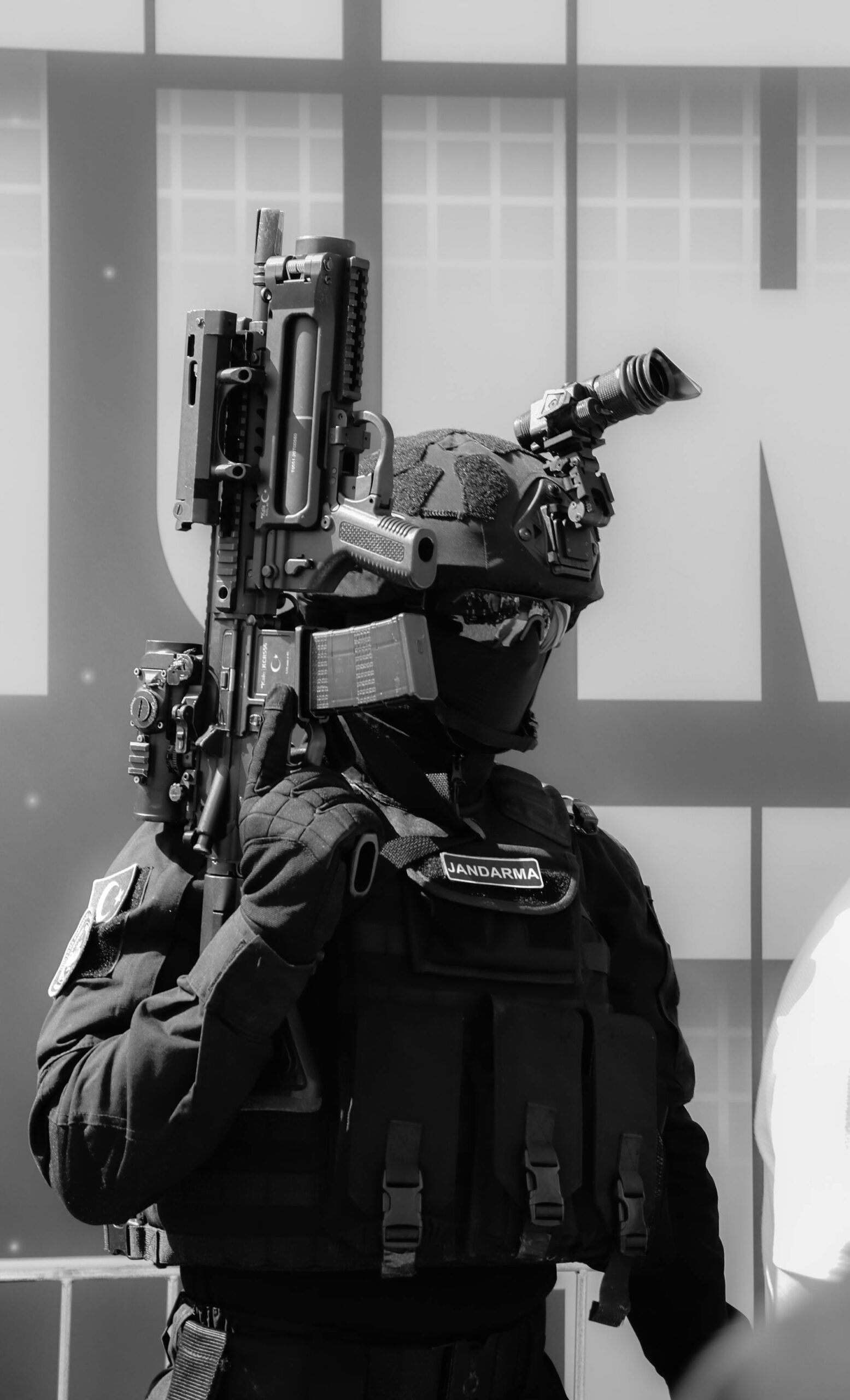
The ongoing war between Russia and Ukraine has not only reshaped geopolitical landscapes but has also significantly impacted global business dynamics. Amidst the turmoil, several technology firms have emerged as key players, driving profits through advancements in defense, cybersecurity, artificial intelligence, and unmanned aerial systems. Investors and business leaders must take note of these trends as they present lucrative opportunities in the evolving security-tech market.
Defense and Aerospace Technologies
The increasing demand for advanced military solutions has propelled several companies to the forefront. Notable beneficiaries include:
Lockheed Martin (NYSE: LMT) – The manufacturer of the HIMARS missile system, extensively used by Ukraine, has seen its stock price soar as defense spending escalates.
Raytheon Technologies (NYSE: RTX) – Supplying Javelin anti-tank missiles and air defense systems, Raytheon has witnessed substantial contract expansions.
Northrop Grumman (NYSE: NOC) – Specializing in unmanned aerial systems and surveillance, the company has profited from increased demand for its Global Hawk drones.
Cybersecurity and Digital Warfare
With cyberattacks escalating on both sides, cybersecurity firms have reported significant revenue boosts:
Palantir Technologies (NYSE: PLTR) – Providing AI-driven intelligence solutions, Palantir has been instrumental in predictive warfare and threat analysis.
CrowdStrike (NASDAQ: CRWD) – A leader in cloud-based cybersecurity, CrowdStrike has played a critical role in protecting Ukrainian and allied infrastructure from Russian cyber threats.
Fortinet (NASDAQ: FTNT) – Its network security solutions have been in high demand, as businesses and governments bolster defenses against cyber espionage.
Hot Companies:
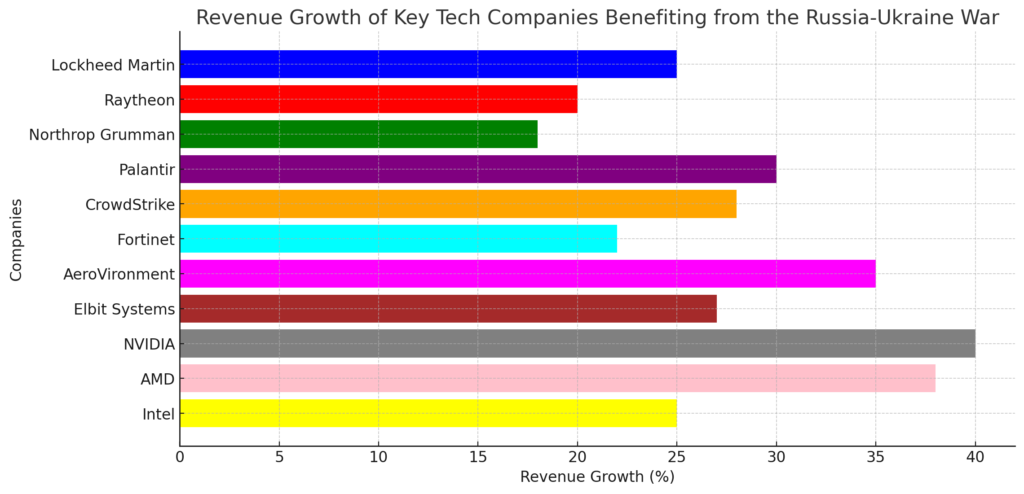
Here is a graphical representation of the revenue growth of key tech companies benefiting from the Russia-Ukraine war. This visualization highlights the major players profiting from advancements in defense, cybersecurity, AI, and drone technology. Let me know if you need any modifications or additional insights!
Cybersecurity and Digital Warfare
AI-driven defense systems have become a game-changer, leading to massive investments in AI-powered warfare technologies:
C3.ai (NYSE: AI) – A major provider of AI-powered logistics and predictive maintenance for military operations.
Anduril Industries (Private) – This defense tech startup has pioneered AI-powered autonomous surveillance and targeting systems.
BAE Systems (LSE: BA.) – Leveraging AI in defense analytics, the company has secured significant contracts from NATO allies.

4 – Drone and Unmanned Systems
Drones have played a crucial role in surveillance and combat, leading to a boom in this industry:
DJI (Private) – While facing regulatory scrutiny, DJI drones have been utilized for reconnaissance and battlefield intelligence.
AeroVironment (NASDAQ: AVAV) – Supplier of the Switchblade drone, extensively used by Ukrainian forces.
Elbit Systems (NASDAQ: ESLT) – An Israeli company specializing in drone warfare and advanced targeting technologies.
5 – Semiconductors and Advanced Computing
With an increased need for computing power in warfare analytics, semiconductor firms have thrived:
Intel (NASDAQ: INTC) – Partnering with defense agencies to enhance real-time battlefield computing.
NVIDIA (NASDAQ: NVDA) – Powering AI-driven military applications with its high-performance GPUs.
AMD (NASDAQ: AMD) – A critical player in supplying processing power for defense applications.
“In the theater of modern warfare, technology is not just a tool—it’s the currency of power and profit.” André Rangel
Investment Implications and Strategic Outlook
For investors and business leaders, these trends present an opportunity to diversify into defense and cybersecurity stocks. Governments worldwide are increasing defense budgets, and technology will remain at the core of modern warfare strategies. As geopolitical conflicts persist, businesses leveraging AI, cybersecurity, drone technology, and semiconductor advancements are positioned for continued growth.
Conclusion:
The intersection of technology and warfare has created an unprecedented financial landscape, where innovation and security are the new frontiers of wealth. Companies operating in defense, cybersecurity, AI, and drone technology are not just responding to military needs but shaping the future of conflict itself. For visionary investors, this sector represents more than short-term gains—it is a strategic play in the long-term evolution of global power structures. As nations continue to arm themselves with cutting-edge technologies, the firms at the heart of this transformation will remain dominant forces in the market.

Stay Informed With the Latest & Most Important News








Advertisement